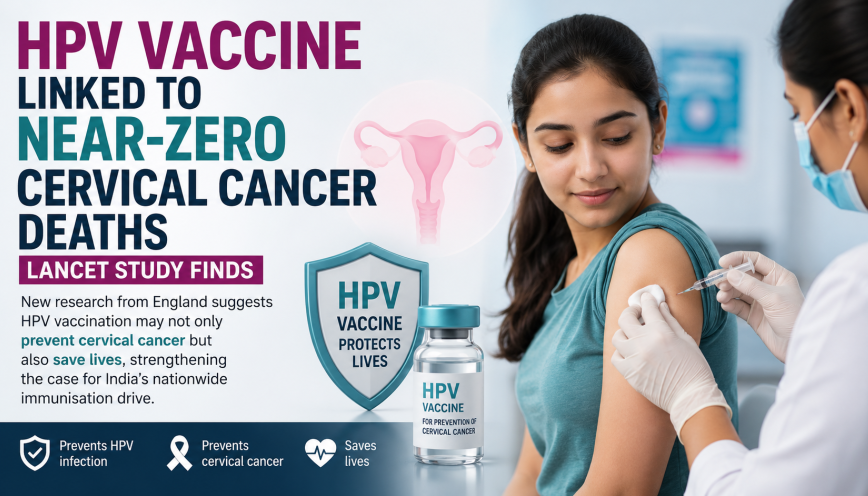
A major new study published in The Lancet has found that the Human Papillomavirus (HPV) vaccine is linked to near-zero cervical cancer deaths among young women in England, offering strong evidence that the vaccine not only prevents cancer but can also save lives.
The findings are being viewed as a significant public health milestone and are expected to strengthen support for expanding HPV vaccination programmes worldwide, including in India, where cervical cancer remains one of the leading causes of cancer-related deaths among women.
Researchers analysed national health data from England after the country introduced the HPV vaccination programme in 2008. The study focused on women who received the vaccine at a younger age, particularly between 12 and 13 years old.
According to the researchers, cervical cancer rates among vaccinated women dropped dramatically. More importantly, deaths from cervical cancer in these younger age groups were found to be extremely rare — close to zero.
The vaccine works by protecting against high-risk strains of HPV, a common virus that spreads through skin-to-skin contact and is responsible for most cervical cancer cases. Scientists say the strongest protection is achieved when the vaccine is given before exposure to the virus, which is why it is recommended during adolescence.
Cervical cancer is largely preventable, yet it continues to affect hundreds of thousands of women globally every year. The World Health Organization (WHO) has repeatedly stressed that HPV vaccination, along with regular screening, is one of the most effective ways to eliminate cervical cancer as a public health threat.
The new findings from England provide some of the clearest real-world evidence so far that large-scale vaccination programmes can significantly reduce both cervical cancer cases and deaths.
Health experts say the results should encourage governments to invest more heavily in national immunisation campaigns, awareness programmes, and early screening initiatives.
India carries a substantial burden of cervical cancer, with thousands of new cases diagnosed every year. Many women are diagnosed at later stages due to limited awareness, lack of routine screening, and unequal access to healthcare services.
The Indian government has been considering wider implementation of HPV vaccination as part of national immunisation efforts. Public health experts believe the latest research adds urgency to these plans.
Doctors also note that myths and misinformation surrounding vaccines continue to affect public confidence. Studies like this help reassure families that HPV vaccines are both safe and highly effective in preventing serious disease.
Medical experts recommend HPV vaccination before the onset of sexual activity, usually during early adolescence. The vaccine is considered most effective when administered at a younger age because the immune response is stronger and exposure to HPV is less likely.
In many countries, the vaccine is routinely offered to girls and increasingly to boys as well, since HPV can also cause other cancers.
Researchers behind the study say the results represent decades of progress in cancer prevention and public health policy. While screening and early diagnosis remain important, vaccination may dramatically reduce the number of future cervical cancer cases.
Experts hope that broader vaccine coverage worldwide could eventually make cervical cancer a rare disease for future generations.
As countries continue to expand immunisation access, the latest findings offer renewed optimism that one of the deadliest cancers affecting women can increasingly be prevented before it even begins.